
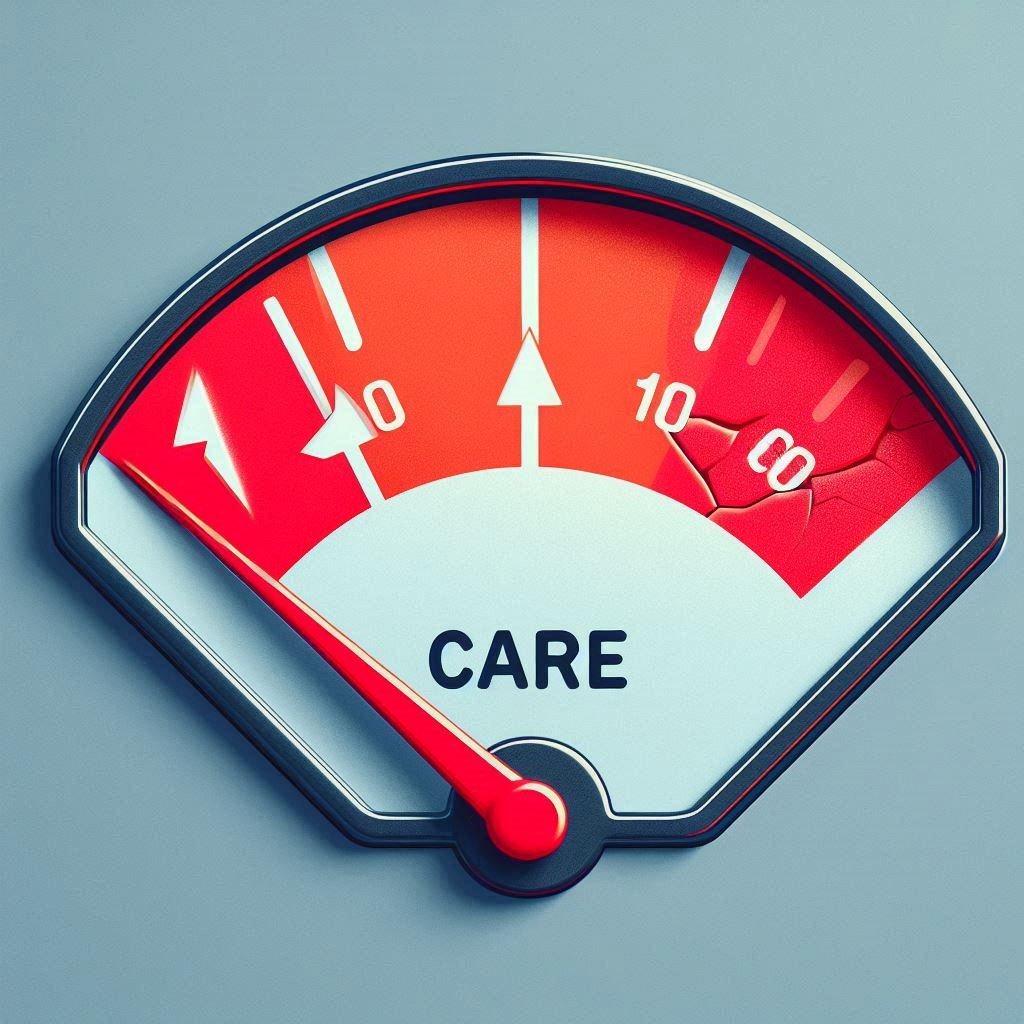
I am preparing to teach a class on ethics to students starting their education in human services. In putting together one of the weekly quizzes I included a question on empathy fatigue.
In a nutshell, empathy fatigue is being desensitized to things you would normally care about (empathize about) due to repeated exposure to stressful, and at times, distressing traumatizing events.
Have you ever had to turn off the news, stop scrolling, or step away from a conversation due to it all becoming too much? If you are anything like me, there are times you want to throw your hands up and say “Enough, I don’t have any more cares to care about that right now”.
We all have those friends or acquaintances who always have a cause to fight, a need of someone they are asking for assistance to meet, or someone or something to rescue. We routinely call these people saints (or if we are feeling less generous we call them people with a savior complex) but you may feel some days like you have put in more than enough of your time trying to save the world for the week and would just like to watch some Tik Toks or Reels in peace without having to feel like you are a heartless monster because you didn’t “rescue” a dog running around outside or sponsor a child for just the cost of a daily cup of coffee (cue Sarah McLachlan’s song “Arms of an Angel”).
With so many competing priorities of what we should care about and pay attention to, it can start to come at a cost to our well-being. What is often not recognized is that our ability to relate to and care for others (i.e. our empathy) is actually a limited resource. If we drain our empathy meter, we can end up feeling some pretty negative emotions and reactions, which experts call “empathy fatigue.”
According to the Cleveland Clinic, empathy fatigue can have emotional and physical symptoms.
Emotional symptoms can include:
- Isolating yourself from others.
- Feeling numb or disconnected.
- Lack of energy to care about other things around you.
- Feeling overwhelmed, powerless or hopeless.
- Not being able to relate to others.
- Feeling angry, sad or depressed.
- Obsessive thoughts about the suffering of others.
- Feeling tense or agitated.
- Feeling speechless or unable to respond appropriately to what’s happening around you.
- Self-blame.
Physical symptoms can include:
- Inability to concentrate, be productive or complete daily tasks.
- Headaches.
- Nausea or upset stomach.
- Difficulty sleeping or constant racing thoughts.
- Self-medicating with drugs or alcohol.
- Conflicts in your relationships.
- Changes in your appetite.
- Feeling exhausted all the time.
- Avoiding work or other activities.
Empathy fatigue has historically been seen in healthcare, first responders, and human service fields and in some ways has been thought of as “the cost of caring”. Workers in these fields are often exposed to repeated encounters with individuals in emergency or crisis situations. These situations result in repeated exposure to stress and even trauma over time which can have a slow but steady influence on the worker’s outlook.
This secondary stress and trauma are experienced vicariously by these workers and can ultimately result in a lessened ability to care. Empathy fatigue is the emotional and physical exhaustion that results from caring for people in crisis day, after day, after day Over time, these workers may experience a sense of numbness and distancing or difficulty continuing to care as a result of repeated exposures to people in crisis.
When talking with beginning mental health professionals, I often talk about how many times you will be seeing clients on one of their worst days or worst periods in their life. People don’t often come to mental health professionals to say, “I was having a good day or great week so I thought I would come in and talk with someone about it”. No, they are often finally admitting to themselves that they don’t know what to do next because everything they’ve tried or know to do hasn’t worked.
This is a very humbling experience to know that someone is coming to you for help because they don’t know what to do next but it can also be very frightening. Doctors, nurses, first responders, social workers, and others routinely have similar experiences. Watching, witnessing, and listening to people talk about the awful things that are happening to them takes a toll. The cumulative toll of these experiences can quickly chew someone up and spit them out if they do not have a good way to process and deal with repeated exposures to these types of situations.
Despite empathy fatigue historically being a challenge for healthcare providers, first responders, and human service professionals, the term is more and more being applied to everyday people and everyday life.
It is a rare person who since the pandemic and ongoing political divide hasn’t felt the negative effects of repeated stress and constant change. If you consume much news at all every day, you may feel overwhelmed by what’s happening in the world around you. If you’ve recently lost your job or a loved one, you might have a difficult time even understanding or remembering that others around you might also be facing hardship.
Day after day we hear bad news and sad story after sad story. At first you might hear such a story and take it to heart, but after a while, you might find yourself starting to tune the stories out or feel numb about them and have a thought like “Oh, look it’s another story about a wildfire”, which wouldn’t be your typical response.
It’s almost like we’ve grown accustomed to bad news and negative things happening in our world, which in turn has started to drain our empathy account. You might feel emotionally cut off from what’s happening around you or unsympathetic to yet more bad news. You might have even said or thought to yourself “I just don’t/can’t care anymore.”
We would all do well to take steps to lessen the impact of repeated secondhand exposure to bad news, sad stories, and stressful, traumatic events. Unfortunately, we don’t yet have the technology of time machines to change horrible events and we haven’t seemed to have cracked the code yet in determining in which situations God will or wont’ intervene, so it is incumbent upon us to learn how to deal with the carnage.
Psychologist, Dr. Susan Albers, of The Cleveland Clinic recommends an A B C model of how to deal with empathy fatigue. Her A B C model gives great advice on how to break free of things like doom scrolling and how to try and avoid empathy fatigue. I’ve reprinted her A B C model below.
- Awareness. It’s important to acknowledge how you’re feeling and to show yourself some self-compassion. Often, we’re so busy we don’t pay attention to how we’re really feeling. Or, we’re so quick to feel an emotion that we try to push it away as soon as it starts. But sometimes, the best thing we can do is to take a moment to actually feel the emotion and sit with it. Be mindful and go through a daily self-assessment to identify what parts of your job or life are causing you stress. What’s triggering you? Take note of how you feel physically and mentally.
- Balance. How much balance do you currently have in your life? Not only with your work and home life, but also with watching the news, scrolling through social media or obsessing over bad news. Do you have other interests besides your job and taking care of other people? Do you have balance between your self-care routine and constantly worrying about the state of the world? Give yourself permission to find a good balance. When things go awry, it can be helpful to return to the basics and focus on what we can control. These are things like eating well, making sure you exercise, focusing on quality sleep and doing something you enjoy. It’s also things like wearing a face mask, not going to large gatherings and washing your hands.
- Connection. In a world filled with perceived dangers, it can be tough to feel connected to others at times. But feeling connected can be so healing to those experiencing empathy fatigue. We need to go out of our way to call or video chat with the people we care about. Talking about your feelings with a professional or trusted friend is another great place to start.
Reaching the point where you don’t or can’t care anymore is a tough place to spend much time. I have some additional thoughts on how to possibly avoid ending up in that space which I will share in a future essay.
I don’t want to give away too much, but I’m not convinced being a good citizen means that we have to be outraged about every single thing but is more about choosing your battles wisely and focusing your attention and energy in ways that can make a difference. If this essay hasn’t left you flabbergasted, I invite you to check back in next week and give me another chance.


Interesting
LikeLike