
With the United States and Israel attacking Iran in the last week, I have seen many posts and takes on how this might map onto passages from the Bible and supposed Biblical prophecies. Rest assured, this is not a post offering my interpretation of how this attack may, or may not, fit into scripture or prophecy. I have a hard enough time spelling and pronouncing dispensationalism, so I am certainly not about to write something that requires me to think about it or spell it more than once.
What I will say is that many of us might benefit from framing our takes with a bit more humility and context.
I understand that everyone believes their perspective is the correct one. People generally do not intentionally adopt schools of thought they believe are wrong. If someone holds a particular interpretation of scripture or prophecy, it is almost certainly because they have come to believe that interpretation makes the most sense of the text and the world.
But when there are literally hundreds of interpretive traditions and theological frameworks, a little humility seems warranted.
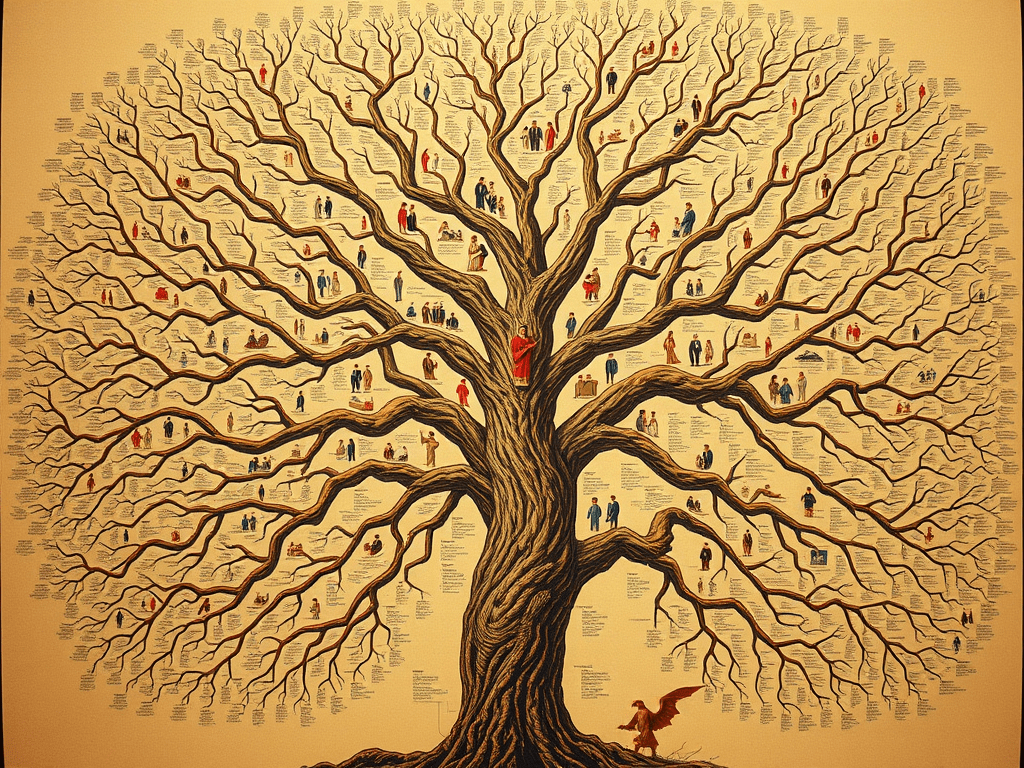
One of the most helpful resources I came across some time ago illustrates this point visually. A website called Useful Charts has created a “family tree” of Christian denominations. It traces how various branches of Christianity developed over the centuries, splitting and evolving into the many traditions that exist today. The links below include both the chart itself and a video explanation of how the various branches connect.
When you look at the chart, it becomes immediately clear that the Christian tradition is not a single straight line through history. It is a branching, complicated, sometimes messy tree. Traditions split over theology, authority, culture, politics, geography, and occasionally personalities. Entire movements formed around disagreements about doctrine, interpretation, and church structure.
I enjoy a good debate as much as anyone. But when I view that chart and see the faith tradition I grew up in represented as a very small branch tucked somewhere near the bottom left of the screen, it puts things into perspective.
The odds that the tradition I grew up in (or the one you grew up in) got absolutely everything exactly right are probably pretty low.
That realization does not invalidate faith. It does not mean beliefs are meaningless or that interpretation is futile. But it should encourage a certain posture when we speak with certainty about matters that generations of thoughtful believers have disagreed about.
History provides an additional dose of caution. Christians across the centuries have repeatedly interpreted contemporary geopolitical events as signs that prophecy was unfolding in their own lifetime. Wars, empires, natural disasters, and political upheavals have all been confidently identified as the final pieces of the prophetic puzzle.
Yet history keeps moving.
Empires rise and fall. Conflicts flare and fade. The “clearly prophetic” events of one generation become footnotes in the history books of the next.
That does not mean scripture has nothing to say about history or the future. But it does suggest that confident declarations about exactly how today’s headlines align with prophetic timelines should probably be made with a softer voice.
Unfortunately, when I see many people weigh in on such matters, the tone often sounds less like thoughtful reflection and more like declarations delivered from a position of righteous certainty.
Humility, however, has always been one of the more underrated virtues in theological conversations.
When we remember how small our particular branch is on the long and complicated tree of Christian history, it becomes easier to hold our interpretations with open hands and minds.
 certifiable
Leave a comment