It’s Advent season, though in many churches, they don’t spend much time talking about Advent. I’m not sure why that is. Maybe it feels a little too dictated or “church-calendar-ish” for some, but I think we actually miss something when we let it slip by quietly.
For a lot of people, “Advent” brings to mind a countdown, maybe a calendar with little chocolates inside, or lights and nativity scenes marking the march toward Christmas. But Advent is really a season of expectation. Its very name comes from a Latin word meaning “coming” or “arrival.”
Traditionally, Advent is a four-week stretch where believers prepare their hearts for Christ’s coming, his arrival in Bethlehem, while also looking ahead to His promised return. Different traditions have their own rhythms: prayer, giving, worship. Each Sunday in Advent typically focuses on a theme for the upcoming week (hope, peace, joy, or love), simple words that point us toward what God is forming in us as we wait.
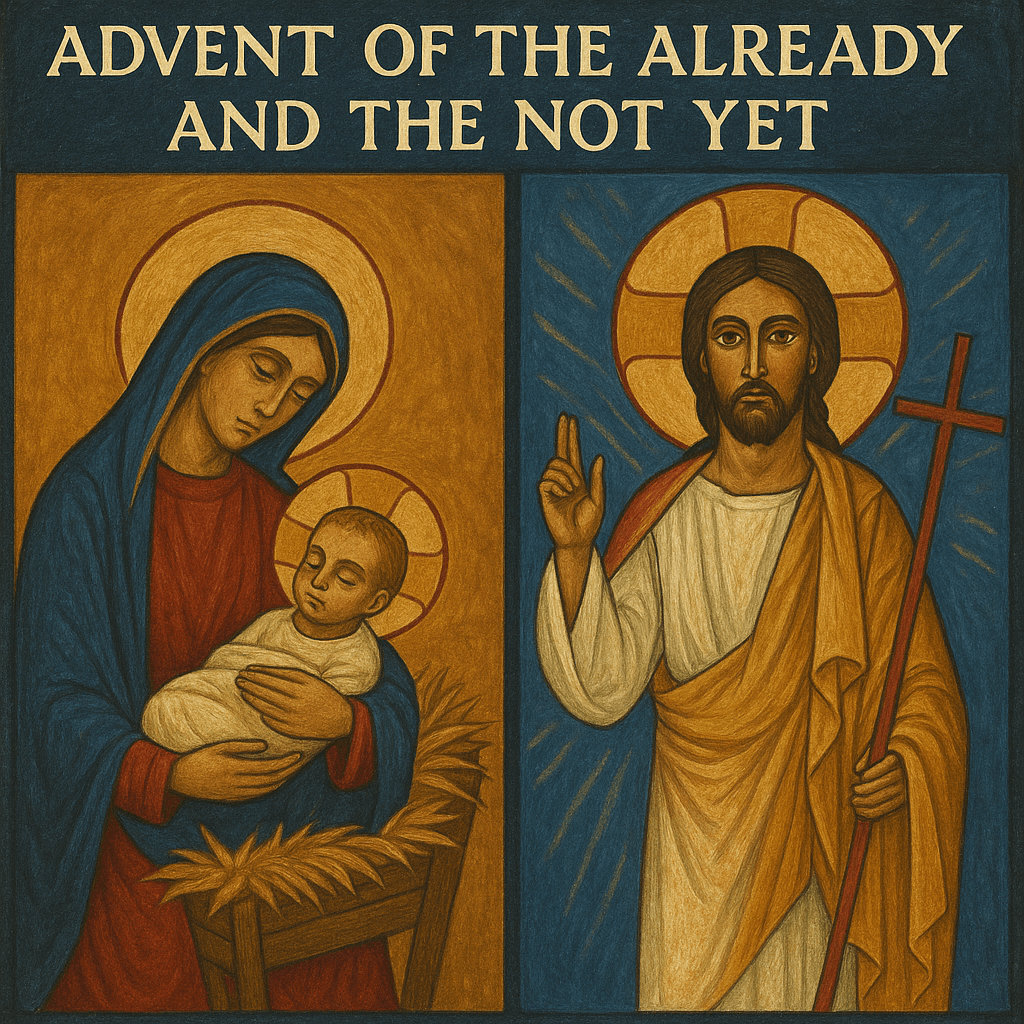
At its core, Advent reminds us that we live in between two comings: Jesus has already arrived… and He will arrive again. We’re people who live in a world that’s still not fulfilled, yet we hold tightly to a future God has promised: a world that will be renewed, healed, and made whole.
I’ve been working through an Advent devotional this month, and one of the themes covered recently was the peace Jesus brought with His arrival. Not the greeting card kind of peace that shows up on Christmas cards, but the radical peace Isaiah prophesied about, a peace brought by the “Prince of Peace.”
Israel longed for a ruler who would take control, crush their enemies, and restore their nation. But instead, God sent His Son in the most disarming way possible: as a baby. Vulnerable. Dependent. Born among the powerless. He lived among the mostly overlooked. And He surrendered His life on a cross, not as a sign of weakness, but as God’s decisive act to break the power of sin and death.
In His death and resurrection, every dividing wall came down. Those who were far off were brought near. Those who were excluded were welcomed in. Ethnicity, gender, status, wealth, and all the other categories we use to sort people, lost their power to determine who belongs in God’s family.
And that’s why communion fits so naturally into this season. The bread and cup remind us of the new covenant Jesus established, the new reality He ushered in, where God gathers people from every background around the same table. As we eat and drink from that table, we remember that His life, poured out for us, is what binds us together. It tears down the walls we tend to build. It calls us into a peace we cannot manufacture on our own.
In Isaiah chapter 9, Isaiah says this of the One who brings this peace:
For unto us a child is born…
And he will be called Wonderful Counselor, Mighty God,
Everlasting Father, Prince of Peace.
Of the greatness of his government and peace,
There will be no end.
He will reign on David’s throne
and over his kingdom,
establishing and upholding it
with justice and righteousness
from that time on and forever.
This is the King who came.
This is the King who is coming again.
And this is the King we remember during this Advent season.
 certifiable
Leave a comment