
I was told by someone recently (almost proudly it seemed) that they get their news from Tik Tok. In full disclosure, I am not a user of Tik Tok so I am going only on my assumptions here, but this claim did not inspire confidence in me as to this person’s news literacy.
I am sure that Tik Tok is a great source for a great many things, but I cannot fathom that it is a good source for news. Based upon my news sources, which I suspect the above young person would question, Tik Tok is in some degree of peril with the Supreme Court scheduled to weigh in on its future and President Elect Trump filing a brief with the same court to give him time to try and save it. Tik Tok is owned by a Chinese company and there are apparently concerns that Tik Tok data and user data is shared with the Chinese government creating personal and national security concerns.
I will have to trust those smarter than me in these areas to assess these risks. I would suggest however that it is probably best just to go ahead and assume in our interconnected world consisting of an Internet of Things, cameras everywhere we go, phones tracking our location, apps tracking our online activity, and smart speakers listening in on our conversations, that anything a company or government would ever want to know about us is already sitting in a database somewhere and probably for sale. Unless you are living off the grid, an assumption or expectation of privacy is most likely naive and misguided.
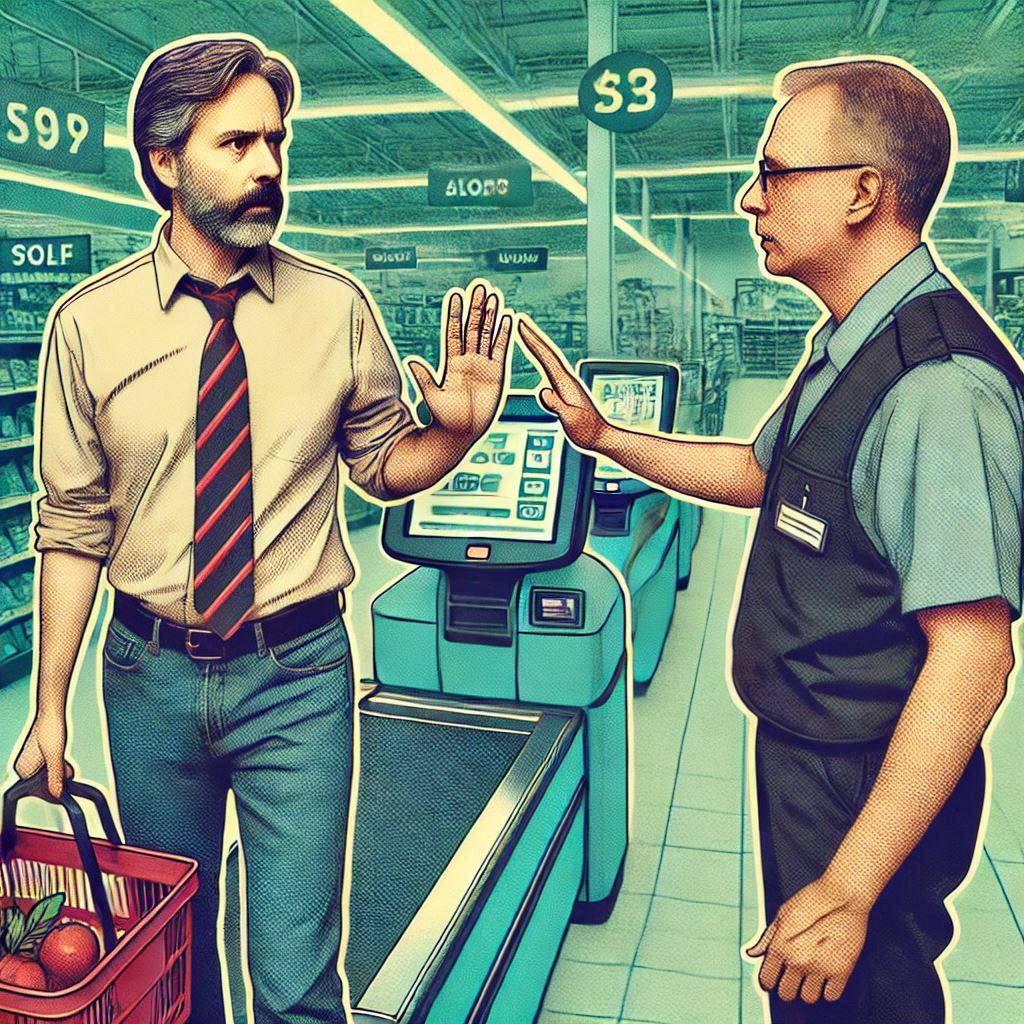
I will share a personal experience which I think illustrates this. I was shopping at Kroger earlier today and used the self-checkout lanes as I didn’t have enough monthly cashier hours in yet at Kroger this month to be in the running for employee of the month. As I scanned my last items, the screen indicated that an attendant was on the way to help. I had not asked for said help, but I was now committed to the unrequested help as the screen would not allow me to progress any further.
The nice attendant greeted me and scanned her badge which brought up an error code which led to a series of screens which looked like footage out of MIT’s Advanced Computer Science Division. There was video of me taking a gallon of tea off the bottom of my cart and then putting it back in my cart after scanning it. But the video of me had all kinds of lines and numbers tracking my hands as they moved with the tea from the cart to the scanner and back to the cart. My actions appeared to be being analyzed by some sort of software algorithm that tracked whether or not I likely scanned the item as the attendant was given a message to check whether all items had been scanned.
As I am writing this from the comforts of my home and not via a Securus tablet in our fine local detention center, I am happy to report that the attendant let me proceed checking out after clearing the message. For that I am happy, but this encounter only reinforces the assumption under which we should all probably operate: Assume that all of your in person and virtual activities are being recorded and analyzed in real time by statistical models and algorithms that are comparing you to what those actions typically mean or indicate.
If you are using self-checkout at a store, you are almost certainly being recorded and an AI enabled software program is analyzing your actions to see if you are engaging in any abnormal scanning or bagging behaviors based upon millions of data points of past shopper behavior. The same is likely true of dozens of other places you frequent and activities in which you engage. Welcome to our Brave New World.
Ironically, when I searched for videos of these types of programs in action in the hope that I might link one to share, they were all on Tik Tok. Somewhere an AI created in a Chinese lab is laughing diabolically.
 certifiable
Leave a comment