By Jeff Drury
Awakening
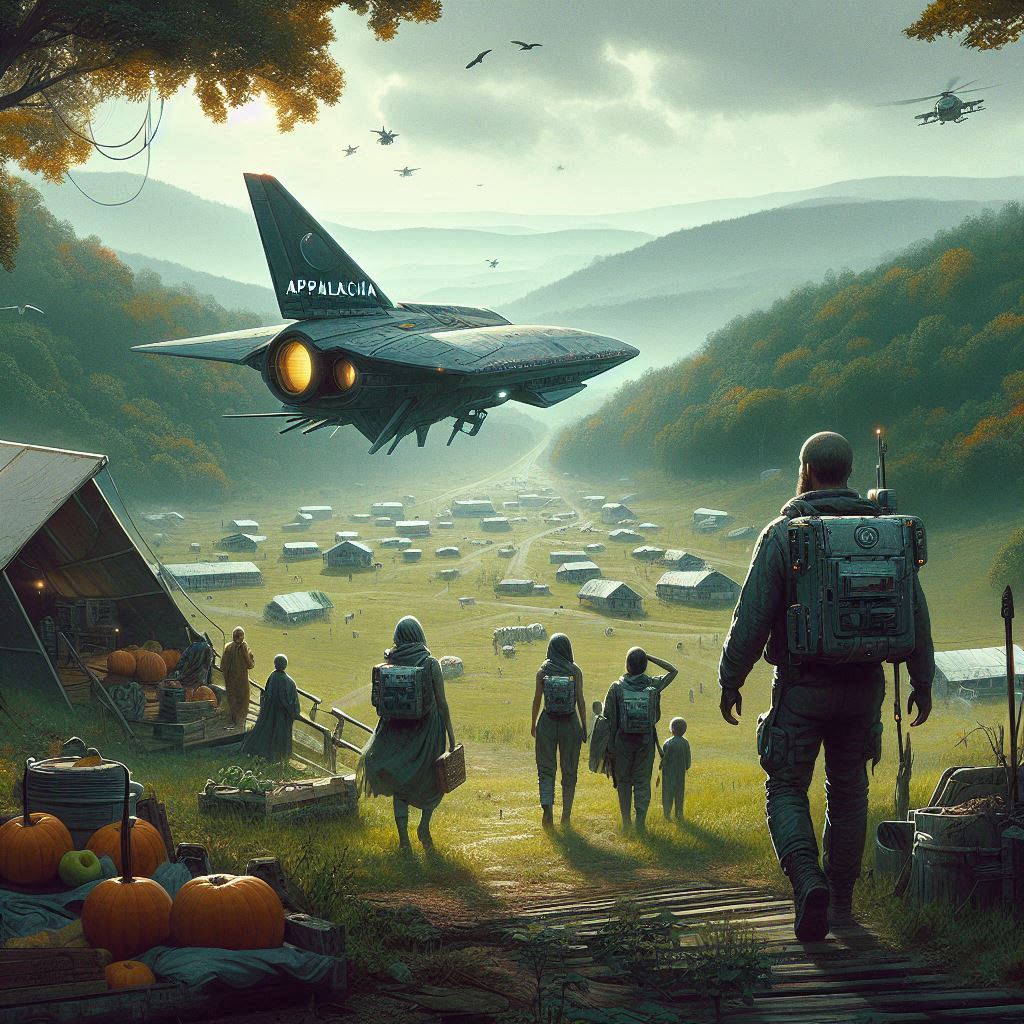
The vastness of space stretched infinitely in every direction, an endless canvas of darkness punctuated by distant, twinkling stars. Amidst this cosmic ocean, a lone ship drifted silently, its sleek, silvery form a stark contrast to the void that surrounded it. The Spirit of Appalachia had traveled for centuries, a solitary voyager on an interstellar journey of unimaginable distance and duration.
Inside the ship, a soft, ethereal glow emanated from the walls, casting gentle light upon rows of cryogenic pods. Each pod contained a slumbering human, frozen in a state of suspended animation, their dreams locked away in the depths of their subconscious. These were the last remnants of Earth, the final hope of a species that had once flourished but was now reduced to a mere handful of souls.
At the heart of the ship, nestled within the control center, an artificial intelligence known as Boone maintained a vigilant watch. Named after the famed American frontiersman, Daniel Boone, Boone was the guardian and caretaker of the ship’s precious cargo, its virtual eyes ever-alert to any signs of danger or malfunction. For centuries, Boone had monitored the ship’s progress, its sophisticated algorithms ensuring that the Spirit of Appalachia remained on course.
Now, after countless years of silent travel, the ship had arrived. The destination was a small, verdant planet orbiting a distant star—a planet with an atmosphere and climate strikingly similar to Earth’s. As the ship approached its final destination, Boone initiated the awakening sequence, his virtual circuits buzzing with purpose.
“Commencing revival protocol,” Boone announced in a calm, measured tone. His voice resonated through the ship’s speakers, a soothing presence designed to reassure the waking colonists.
The cryogenic pods hummed softly as they began to thaw, the frozen forms within gradually returning to life. Inside one of the pods, Dr. Mother Jones’ eyes fluttered open, her vision blurry and unfocused. She blinked several times, trying to shake off the disorientation that clung to her like a heavy fog.
“Welcome back, Dr. Jones,” Boone’s voice echoed gently in her ears. “You are aboard The Spirit of Appalachia. We have reached our destination.”
Mother Jones took a deep breath, the crisp, filtered air filling her lungs. She sat up slowly, her muscles protesting the sudden movement after centuries of inactivity. Around her, other colonists were awakening as well, their expressions mirroring her own mixture of confusion and wonder.
“Boone,” Mother Jones rasped, her voice hoarse from disuse. “Status report, please.”
“The ship is in optimal condition,” Boone replied smoothly. “All essential systems are functioning within normal parameters. We have entered orbit around the planet designated as New Appalachia. Preliminary scans indicate a habitable environment, suitable for human colonization.”
Mother Jones nodded, the weight of their mission settling upon her shoulders. She had been chosen to lead this expedition, a responsibility that now felt both daunting and exhilarating. As a scientist and a descendant of Appalachian pioneers, she carried with her the knowledge and traditions of a culture deeply rooted in resilience and resourcefulness.
“Begin landing preparations,” Mother Jones instructed, her voice growing steadier. “And initiate the awakening sequence for the leadership team.”
“Understood,” Boone responded. “Landing preparations are underway. The leadership team will be fully revived within the hour.”
As the ship’s engines roared to life, Mother Jones gazed out of the viewport, her eyes fixed on the lush, green world below. New Appalachia. It was a name that evoked a sense of hope and continuity, a bridge between the past and the future. This new world held the promise of a fresh start, a chance to rebuild and thrive amidst the beauty of an untouched frontier.
As more colonists stirred from their long slumber, The Spirit of Appalachia descended gracefully towards the planet’s surface, its mission about to enter a new and exciting phase. Mother Jones felt a surge of determination. They were the heirs of a rich heritage, a tapestry woven with stories of survival and perseverance. And now, in this new world, they would write the next chapter of humanity’s story—a story that began with the Spirit of Appalachia.
Beginning
The landing was smoother than Mother Jones had anticipated. The Spirit of Appalachia settled onto the soft, fertile ground of their new home, its landing gear sinking slightly into the rich soil. As the engines powered down, a profound silence enveloped the ship, broken only by the excited murmurs of the awakened colonists. They were here, at long last.
Mother Jones stood at the main hatch, her breath catching in her throat as the doors slowly opened. A warm, gentle breeze filled the ship, carrying with it the scents of fresh vegetation and a hint of unfamiliar flora. She stepped out onto the ramp, her boots making contact with the alien earth. Behind her, the leadership team and other colonists followed, their expressions a mix of awe and trepidation.
“Welcome to New Appalachia,” Mother Jones said, turning to face the group. Her voice carried a note of solemnity, acknowledging the gravity of their task. “This is our new home, and it is up to us to build a future here.”
As they ventured further from the ship, they marveled at the vibrant landscape that unfolded before them. Rolling hills, dense forests, and sparkling streams greeted their eyes, reminiscent of the Appalachian Mountains they had left behind on Earth. It was as if they had been granted a second chance, a new Eden to cultivate and cherish.
The colonists set up a temporary camp near the ship, using the supplies and equipment stored on board. Tents were erected, and a makeshift community began to take shape. Jones gathered the leadership team around a central fire, the flickering flames casting dancing shadows on their faces.
“We need to take stock of our resources and capabilities,” Jones began, her tone practical. “And we must remember that we carry with us the legacy of Appalachia. Our knowledge, our culture, our skills—they will be the foundation upon which we build this new society.”
The team nodded in agreement. They were a diverse group, each chosen for their expertise and resilience. Dr. Wendy Berry, a botanist, spoke up first. “I can begin cataloging the local flora and fauna, see what we can use for food and medicine.”
“Good,” Jones said. “We need to understand this environment and learn how to live in harmony with it. What about communication and coordination?”
“Boone can assist with that,” replied Tyra Childers, the ship’s engineer. “His AI systems are intact, and he can help us organize and manage our efforts.”
Boone’s voice chimed in. “I will continue to monitor all essential systems and provide support as needed. Additionally, I have vast amounts of cultural and historical data from Appalachia that can be accessed to guide our development.”
The mention of other cultural data sparked a somber silence. They had hoped to be one of many new colonies, each bringing the richness of Earth’s diverse cultures to the stars. But the reality was far more stark. Other ships, like The Spirit of The Rockies, The Spirit of Asia, The Spirit of Africa, and The Spirit of the Tropics to name a few had not survived the journey. Communications with them had ceased long ago, and their fates were sealed in the cold, unforgiving expanse of space.
“We’re it,” Mother Jones said quietly, the weight of those words sinking in. “We’re all that’s left of humanity. The knowledge and traditions of Appalachia are all that we have to guide us.”
There was a solemn nodding among the team. Their ancestors’ songs, stories, and craftsmanship—these would be the bedrock of their new civilization. Mother Jones felt a surge of determination. They had been chosen for a reason, and they would honor the legacy they carried.
“Then we must embrace it fully,” Jones continued. “We will teach our children the old songs and stories. We will build homes inspired by the cabins and farms of Appalachia. Our values of community, resilience, and respect for nature will be our guiding principles.”
The colonists spent the next days exploring their surroundings and establishing a more permanent settlement. They built log cabins from the abundant timber, planted gardens with seeds they had brought, and created a central gathering place where they could share meals and stories.
Dr. Berry discovered a variety of edible plants and began cultivating them, while Tyra and Boone worked together to set up a communication network using the ship’s remaining technology. The colonists adapted old Appalachian traditions to their new environment, finding comfort and continuity in the familiar practices.
At night, they gathered around the central fire, singing folk songs and sharing tales passed down through generations. These moments of connection were vital, strengthening their resolve and reminding them of the rich heritage they carried within them.
We will wait for you
As the sun turns into ashes
And pulls down the moon
We will wait for you
It’s a long, hard trip
Oh, but we can sleep and bear it
‘Cause we know what the hell we’re traveling for
And we will wait for you
We were never made to fly forever
We were just meant to go far enough
To find what we were chasin’ after
We believe we found it here in the stars
As the sun set on their first week in New Appalachia, Mother Jones stood at the edge of the settlement, looking out over the land that was now their home. She felt a deep sense of gratitude and hope. They had survived the journey against all odds, and now they had a chance to build something new and beautiful.
With the Spirit of Appalachia guiding them, they would honor their past and create a future worthy of the legacy they carried. The echoes of their ancestors’ voices would ring out across this new world, a testament to the enduring spirit of humanity.
Governing
The golden glow of the setting bathed New Appalachia in a warm light, casting long shadows across the fledgling settlement. The colonists had made remarkable progress in just a few short weeks, transforming the pristine landscape into a bustling community. Log cabins dotted the hillside, gardens flourished, and livestock pens teemed with life. It was a scene that mirrored the old Appalachian homesteads, a testament to their determination and ingenuity.
As night fell, the colonists gathered around a central campfire, its flickering flames offering warmth and comfort. The leadership team sat in a circle, the firelight dancing on their faces. Mother Jones, their appointed leader, knew that tonight’s discussion would shape the future of their society.
“Thank you all for being here,” Mother Jones began, her voice steady. “We’ve done incredible work to get this far, but now we need to discuss how we govern ourselves. Our survival depends on more than just food and shelter—we need order, fairness, and a sense of community.”
The others nodded in agreement. Dr. Wendy Berry, the botanist, leaned forward, his brow furrowed in thought. “I’ve been thinking about how our ancestors lived in the mountains. They had a deep respect for the land and for each other. Decisions were often made by the community, with a focus on mutual support and shared responsibility.”
Tyra Childers, the engineer, chimed in. “Exactly. They valued independence, but they also knew the importance of coming together in times of need. We need a system that reflects those values, something that balances individual freedom with collective well-being.”
Mother Jones looked around the circle, seeing the same resolve reflected in each face. “So, how do we implement that here? What kind of structure do we want for our government?”
Thomas Hopewell, a historian and one of the elders among them, spoke up. “The old town meetings come to mind. Every voice was heard, and decisions were made by consensus. It’s a model that fosters unity and ensures everyone has a stake in the outcome.”
“We could have regular gatherings where everyone can speak their mind,” suggested Maria Jenkins, a teacher. “A council of representatives could bring concerns and ideas from different parts of the settlement. They could help facilitate discussions and ensure we reach decisions that benefit the whole community.”
Mother Jones nodded thoughtfully. “I like the idea of a council. We could have members elected from different sectors—agriculture, infrastructure, education, health—each bringing their expertise and the concerns of their constituents.”
Boone, the ship’s AI, interjected. “I can assist in organizing these gatherings and maintaining records of the proceedings. Transparency and accessibility of information will be crucial to building trust in this new government.”
The group continued to discuss the finer points, outlining a basic structure that would allow for both leadership and broad participation. They envisioned a council of elders, elected by the community, with regular town meetings to discuss and vote on important matters. Decisions would be made by consensus whenever possible, with a focus on transparency and fairness.
As the conversation wound down, a sense of accomplishment and hope settled over the group. They had laid the foundation for a government rooted in the values of their Appalachian heritage—community, resilience, and respect for the land.
Mother Jones looked around the circle, a smile tugging at her lips. “I think we’ve made a good start. Now, let’s remind ourselves of what we’re building this for—the love and unity that brought us here. Tyra, can you lead us in a song?”
Tyra nodded, picking up her guitar. She strummed chords from “In Our Love,” and the familiar melody filled the air. The others joined in, their voices blending in harmony, the lyrics resonating deeply with their shared experience:
We will stand our ground
We’re not a bad band looking for takers
We’re the finest thing around
So we will stand our ground
‘Cause space is cold out here
And we know some men search for ages
For the home that we have found
So we will stand our ground
We were never made to fly forever
We were just meant to go far enough
To find what we were chasin’ after
We believe we found it here in the stars
As they sang, the words took on new meaning, reflecting their journey and the bonds that had formed among them. The fire crackled softly, its warmth mirrored in their hearts. In this moment, they felt a profound connection to their past and a renewed sense of purpose for the future.
When the song ended, a peaceful silence enveloped the group. Mother Jones spoke softly, her voice filled with emotion. “In your love, we’ll always find our way. Let’s carry that sentiment with us as we build our new home. Together, we can create something beautiful and enduring.”
With a final look at the fire, the colonists dispersed to their cabins, each carrying a piece of the shared dream they had sung into existence. Under the starry sky of New Appalachia, a new society was being born, one built on the enduring spirit of Appalachia and the unwavering bonds of love and community.
Remembering
The settlers had found their rhythm in New Appalachia, their community growing stronger and more cohesive with each passing day. The cabins were now sturdy homes, the gardens thriving, and the council meetings becoming a cornerstone of their society. As they continued to build their new world, they felt a deep need to preserve the culture and history of Appalachia they had left behind on Earth. This desire gave birth to the idea of a museum, a repository of their past and a beacon for future generations.
The museum took shape in the heart of the settlement, a large log structure reminiscent of the old Appalachian homesteads. Its walls were adorned with hand-carved designs, and its spacious interior was divided into sections, each dedicated to different aspects of their heritage.
One section was devoted to the legends and folklore that had been passed down through generations. At the center of this exhibit stood a life-sized statue of the Mothman, its wings spread wide and eyes glowing a haunting red. The statue, crafted from native wood and painted meticulously, was a striking figure that drew the curiosity of both children and adults.
Beside the statue, a plaque recounted the legend of the Mothman:
“The Mothman, a mysterious creature said to have been seen in the Appalachian region, was a harbinger of doom and disaster. Sightings of this winged figure, with glowing red eyes, often preceded tragic events, instilling both fear and awe in the hearts of those who claimed to have encountered it.”
As the settlers explored the museum, they found sections dedicated to other facets of their culture. One area displayed traditional Appalachian crafts—quilts, pottery, and woodworking—each piece telling a story of skill and perseverance. Another section featured musical instruments, with recordings of old folk songs that filled the air with a sense of nostalgia and continuity.
A corner of the museum was dedicated to Appalachian superstitions and folk beliefs, an integral part of their cultural fabric. Mother Jones, the settlement’s leader, had carefully curated this exhibit, ensuring that each superstition was accompanied by an explanation and context.
A sign greeted visitors:
“Appalachian Superstitions: Echoes of Our Ancestors”
Underneath, various superstitions were highlighted:
- Shoes on a Bed: It heralds the death of someone close to you. Never place shoes on a bed, lest you invite misfortune into your home.
- Old Broom, New House: Never take an old broom to a new house – old energy and dirt will follow. Leave the past behind and start anew with a fresh broom.
- Salt for Protection: Salt placed in the four corners and on all window sills of the house will keep out evil. A simple yet powerful safeguard against malevolent forces.
- Sweeping Luck: It’s bad luck to sweep dirt out your door. Instead, sweep it towards the center of the room to gather good fortune.
- Eyelash Wishes: When an eyelash falls out, pinch it lightly between your thumb and forefinger, then make a wish and blow. If it sticks, the wish will come true.
- Seventh Daughter/Son: The seventh daughter of the seventh daughter or the seventh son of the seventh son will be a healer, fortune teller, preacher, or prophet. A lineage of mystical significance and revered power.
- Red Hair Luck: Rubbing the head of a person with red hair is good luck. Our red-headed friends are cherished for the fortune they bring.
In another part of the museum, a special section was dedicated to the beliefs surrounding the supernatural. This exhibit included stories of healers, fortune tellers, preachers, and prophets, highlighting the revered role these individuals played in their communities.
A red-haired settler, Michael, stood proudly near his display, inviting visitors to rub his head for good luck. Children giggled as they took turns, their laughter filling the museum with joy and hope.
As the museum’s exhibits came together, the colonists felt a renewed connection to their roots. The museum was not just a collection of artifacts and stories; it was a living, breathing testament to their resilience and identity.
One evening, the leaders gathered around the campfire outside the museum, reflecting on the significance of what they had built. Mother Jones looked around at her companions, a sense of pride swelling in her chest.
“We’ve done something truly remarkable here,” she said, her voice soft but filled with conviction. “This museum isn’t just for us—it’s for our children and their children. It’s a reminder of where we come from and the values that guide us.”
Thomas Hopewell, the historian, nodded. “It’s a bridge between our past and our future. By preserving these stories and traditions, we’re ensuring that the spirit of Appalachia lives on, no matter how far we’ve traveled.”
Tyra Childers strummed her guitar gently, the familiar chords of “In Our Love” filling the night air once more. The leaders joined in, their voices blending in harmony:
We will work for you
‘Til our hands are tired and bleedin’
We know what it is from us we’re needin’
We will work for you
Like a team of mules
Pulling hell off from its hinges
It’s for a home that we’ll keep tendin’
We will work for you
We were never made to fly forever
We were just meant to go far enough
To find what we were chasin’ after
We believe we found it here in the stars
The song ended, and a peaceful silence settled over the group. Mother Jones gazed at the museum, its wooden walls glowing softly in the firelight. “In your love, we’ll always find our way,” she echoed, feeling the truth of those words deep in her heart.
With the museum standing as a guardian of their heritage, the settlers of New Appalachia were ready to face whatever challenges lay ahead. They had built not just a settlement, but a community, rooted in the strength of their past and united in their vision for the future.
Thanksgiving
The crisp, cool air of New Appalachia carried the promise of autumn, the trees ablaze with colors reminiscent of the settlers’ homeland on Earth. The community had thrived in the months since their arrival, drawing strength from their shared heritage and the rich land that now supported them. They had built homes, established farms, and created a vibrant community, all under the guiding principles of their Appalachian roots.
It was during this time of prosperity that the settlers first encountered the native inhabitants of New Appalachia. The meeting had been unexpected but peaceful. While exploring beyond their usual boundaries, a group of settlers had stumbled upon a village nestled in a valley. The native inhabitants, humanoid but distinctly different, with shimmering blue skin and intricate patterns adorning their bodies, had approached with curiosity rather than hostility.
Mother Jones, ever the diplomat, had led the initial exchanges, using gestures and drawings to communicate. Over time, they established a basic understanding, enough to convey their desire for friendship and cooperation. The native inhabitants, who called themselves the Fugate, reciprocated, intrigued by the newcomers and their ways.
As a gesture of goodwill, the settlers decided to host a grand feast, reminiscent of an Appalachian Thanksgiving, to share their culture and celebrate this new alliance. The preparations were extensive, with everyone in the settlement contributing to the effort. The air was filled with the mouthwatering aromas of traditional dishes, and the spirit of unity and festivity permeated the camp.
The day of the feast arrived with bright, clear skies. Long tables were set up in the open field near the museum, decorated with autumn leaves and handmade cloths. The settlers and the Fugate gathered together, the sight of the two communities mingling bringing a smile to Mother Jones’ face. It was a moment of true connection, a blending of two worlds.
The tables were laden with an array of dishes, each carefully prepared to showcase the flavors of Appalachia:
- Ramps: Wild leeks sautéed to perfection, their pungent aroma mingling with the other scents.
- Venison: Tender and savory, hunted from the surrounding forests and cooked with traditional herbs and spices.
- Bur-goo: A rich, hearty stew made from a mix of meats and vegetables, simmering in large pots.
- Biscuits and Gravy: Fluffy biscuits smothered in creamy, peppery gravy, a comfort food staple.
- Pawpaws: The sweet, custard-like fruit, gathered from the trees they had discovered, providing a deliciously exotic flavor.
- Moonshine and Bourbon: Distilled with care, these spirits brought warmth and cheer to the gathering.
- Cornbread: Golden and slightly sweet, baked in cast-iron skillets and served hot.
Mother Jones stood to address the gathered crowd, her voice carrying over the murmur of conversation. “Today, we come together not just as settlers and natives, but as friends. We share this meal to honor our past, celebrate our present, and look forward to a future of cooperation and peace.”
She lifted her glass of moonshine, a gesture mirrored by the settlers and cautiously imitated by the Fugate. “To new beginnings,” she said, her voice filled with hope. “May this feast mark the start of a lasting friendship.”
As the feast began, the settlers explained each dish to their guests, sharing stories and traditions associated with the food. The Fugate, in turn, introduced the settlers to their own customs and foods, bringing forth exotic fruits and vegetables that were new to the settlers’ palates. There was laughter, curiosity, and a genuine sense of camaraderie as the two communities bonded over the shared meal.
The highlight of the evening was a spontaneous music session. Tyra Childers brought out her guitar, and the settlers began to sing traditional Appalachian songs. The Fugate, fascinated by the music, responded with their own hauntingly beautiful melodies, creating a harmonious blend of sounds that echoed through the night.
We were never made to fly forever
We were just meant to go far enough
To find what we were chasin’ after
We believe we found it here in the stars
As the sun set, casting a warm glow over the gathering, Mother Jones felt a profound sense of accomplishment. They had not only survived but had begun to thrive, forging bonds with the native inhabitants and sharing the rich tapestry of their heritage. The feast was a testament to their resilience and their capacity for building bridges across cultures.
Later, as the stars twinkled overhead and the last of the dishes were cleared, Mother Jones walked to the edge of the field. She looked out over the settlement, the museum standing proudly at its heart, and felt a deep sense of peace. They had honored their past, embraced their present, and were ready to face the future with hope and determination.
In the company of new friends and old traditions, the settlers of New Appalachia had found their place in the universe. The spirit of Appalachia lived on, not just in their hearts, but in the bonds they had forged and the community they had built. And so, under the starlit sky, they celebrated their journey, their heritage, and the endless possibilities of this new world.
The Spirit of Appalachia is an original short story written by Jeff Drury.
Tyler Childers’ song “In Your Love” was adapted for this short story as an example of an artist from Appalachia whose work endured through time and space with some minor changes.
 certifiable
Leave a comment